


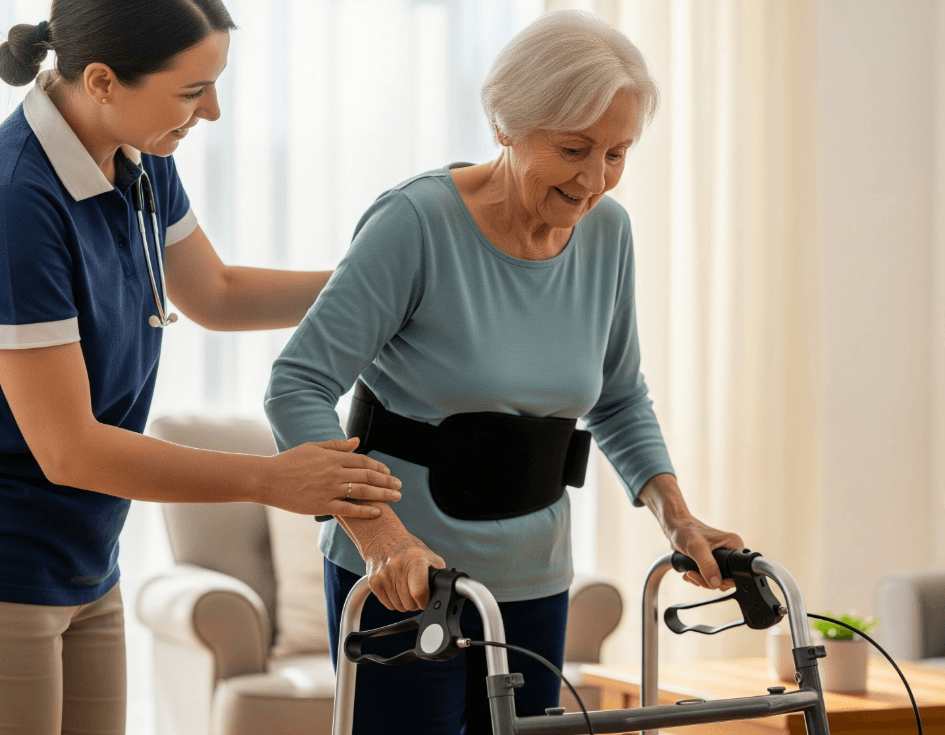
Innovations in Assistive Technology for Ageing & Disability in 2025
“Assistive technology does not merely compensate for limitations; it redefines the boundaries of human capability and possibility. By intertwining innovation, empathy, and accessibility, it forges pathways towards a society where independence is universal, participation is unhindered, and dignity is preserved.” — Dr Brian Friedlander
As populations age and support needs become more complex, assistive technology plays an increasingly critical role in enhancing independence and quality of life. The rapid advancement of smart devices, artificial intelligence and personalised solutions is transforming how people with ageing and disability challenges live and engage with their environments. In 2025, these innovations are no longer futuristic concepts but practical tools integrated into daily care, fostering autonomy, safety and connection. Key advancements include:
Smart Wearables
Fall-detection sensors automatically alert carers and emergency services. Vital-sign monitors track heart rate, blood oxygen and activity levels, enabling proactive interventions.
Voice-Activated Home Controls
Hands-free lighting, thermostats and doors empower individuals with mobility limitations. Seamless integration with smart speakers reduces barriers to environmental access.
AI-Enhanced Communication Aids
Predictive text and symbol-based interfaces speed communication for non-verbal users. Emotion-recognition software assists support workers in tailoring responses to mood changes.
Robotic Mobility Support
Lightweight exoskeletons augment strength and endurance for those with muscle weakness. Autonomous wheelchairs navigate complex environments with obstacle detection.
Virtual Reality Rehabilitation
Immersive VR exercises promote balance and motor skills in safe, motivating settings. Cognitive VR games support memory, attention and problem-solving for individuals with acquired brain injury.
3D-Printed Adaptive Devices
Custom grips, utensils and orthotic supports manufactured on demand provide precise ergonomic fit. Cost-effective production accelerates delivery of bespoke solutions.
Telepresence Robots
Remote-controlled avatars enable virtual participation in family gatherings, medical consultations and social events, reducing isolation for home-bound individuals.
Smart Medication Dispensers
Automated dosing schedules with reminders and lockout functions improve medication adherence and reduce errors.
Impact
These technologies foster autonomy, safety and social inclusion—transforming care from reactive to proactive and personalised. They are invaluable not only to individuals but also to carers and healthcare systems by enabling earlier interventions and reducing hospital admissions.
Conclusion
The future of ageing and disability support is inextricably linked with innovation in assistive technology. Embracing these tools allows individuals to maintain dignity and control, enriches quality of life and redefines what it means to age and live with disability in the modern world. As these technologies continue to evolve and become more accessible, they offer unprecedented opportunities to tailor care, enhance wellbeing and support inclusive communities. Ultimately, the integration of assistive technology represents a paradigm shift—from care defined by limitations to care powered by possibility.
Tags :
- Aged Care Wellbeing
- Aged care worker
- Emotional Health